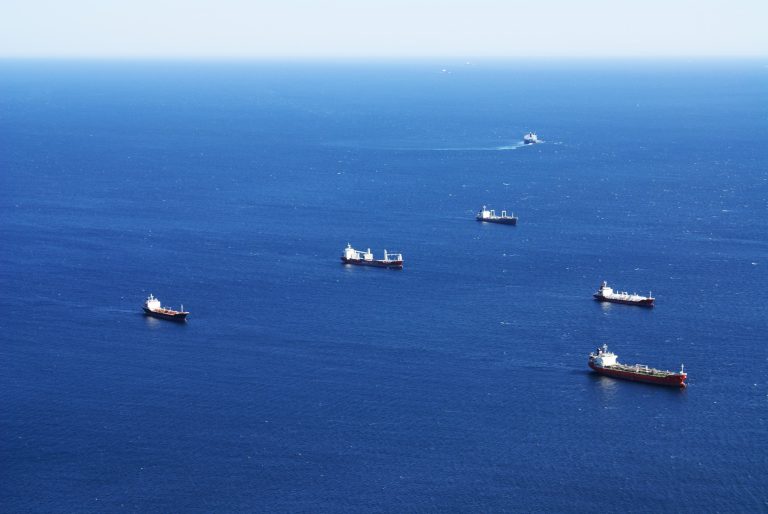

In May 2026, BIMCO, the International Chamber of Shipping and other maritime organisations issued guidance for vessels considering transit through the Strait of Hormuz.
The guidance did not prescribe one decision for every vessel. It established a structured process for assessing the specific threat, operating conditions and voyage. It also reaffirmed that safety of life, safe navigation and environmental protection remain the primary considerations, with the master retaining overriding authority.
The circumstances are different from deep-sea mining, but the leadership principle is relevant. Complex operations require input from several specialists. Final authority must nevertheless remain clear.
An integrated system with divided responsibilities
Deep-sea mining will combine a production-support vessel, subsea equipment, environmental monitoring, data systems, contractors and shore-based management.
The master will retain responsibility for vessel safety. Subsea teams will control mining equipment. Environmental specialists will interpret monitoring data. Equipment providers may define technical limitations, while shore management will retain wider operational and commercial responsibilities.
Each role is necessary. The difficulty arises when a decision affects several areas at once.
Continuing an operation may be technically possible but increase risk to the vessel, equipment or marine environment. Environmental data may indicate an unexpected change while the significance remains uncertain. A technical specialist may recommend continuation, while the master or environmental team has legitimate reasons for caution.
These situations cannot be resolved solely within one discipline.

Lessons from shipping and offshore petroleum
The International Safety Management Code requires a shipping company to define the master’s responsibility and authority. It also requires the safety management system to confirm the master’s overriding authority to make decisions concerning safety and pollution prevention.
The designated person ashore provides a link between the vessel and senior management. This supports escalation without removing the master’s authority onboard.
The ICS Deck Procedures Guide reinforces this approach through attention to shipboard roles, closed-loop communication, challenging decisions, stop-work authority and coordination between the bridge, deck and engine room.
Offshore petroleum provides a related assurance model. Operators establish offshore command structures, emergency organisations, operating limits and escalation criteria before activities begin. Specialist and contractor input informs the decision, but responsibility should remain identifiable.
The lesson is not that DSM should reproduce one established model. It is that authority must be clear across technical and organisational interfaces.
Escalation must be agreed in advance
The operating organisation should define who may suspend an activity, which conditions require mandatory escalation and who has authority to approve restart. It should also establish how conflicting technical advice is resolved and when shore management, the sponsoring State or ISA must be notified.
Particular attention will be needed where vessel safety and mining operations overlap. A decision affecting dynamic positioning, launch and recovery, subsea equipment or weather limitations may fall within several procedures and contractual arrangements. These documents must not create competing lines of authority.
Stop-work authority should be available to personnel who identify immediate danger or loss of a critical control. Leaders must also ensure that using this authority does not lead to informal criticism or commercial pressure.

Leadership creates permission to challenge
Formal responsibilities are not enough. People must be able to raise uncertainty, question assumptions and challenge a proposed course of action.
This requires a culture in which contrary information is actively requested. It does not mean that every objection prevents a decision. It means that relevant concerns are heard, assessed and documented before the person with authority decides.
The quality of a decision depends partly on whether leaders receive information they would prefer not to hear.
ISA provides the regulatory context
The 2026 Further Revised Consolidated Text provides that contractors should allocate sufficient resources and assign roles and responsibilities for implementing their regulatory obligations. It also maintains contractor responsibility where work is performed by suppliers or subcontractors.
These are important principles, but each contractor must translate them into practical authority offshore.
Approval of a plan of work by the ISA should not be confused with responsibility for operational decisions. The contractor remains responsible for conducting the activity within the approved framework. At the same time, the master retains the authority and responsibilities established through maritime law and the vessel’s safety management system.
ISO supports the decision framework
ISO 45001 supports defined roles, consultation, communication and worker participation. ISO 31000 provides a framework for decisions involving risk, uncertainty and changing information.
These standards cannot determine who should hold authority in every DSM operating configuration. They can help ensure that decision criteria, escalation routes and communication arrangements are documented, exercised and reviewed.
Leadership under uncertainty does not mean that one person decides alone. It means that relevant expertise is considered, conflicting information is addressed and final authority remains clear. In deep-sea mining, this must be settled before the first difficult decision has to be made offshore.
Bruncell Larsen Strategic Advisory supports organisations working with leadership, risk governance and operational assurance in complex maritime activities. Please contact me if you would like to discuss these issues further.