During its meetings in March and July 2026, the International Seabed Authority Council continued discussing where test mining and pilot mining should sit on the route towards commercial production.
A joint proposal developed by Belgium, China and Germany sets out a two-phase model. Test mining would take place during exploration and before submission of an application for a plan of work for exploitation. Pilot mining would follow approval of that plan but take place before commercial production begins.
The distinction affects which part of the Mining Code applies and what evidence is available at each regulatory decision point. It also provides a useful framework for considering operational readiness and continual improvement.
The February 2026 report of the Informal Working Group shows that several details remain under discussion. These include the scale and duration of testing, possible exemptions, regulatory responsibilities and the procedure if pilot-mining results are insufficient.
Different tests for different decisions
Test mining under an exploration contract would generate technical and environmental evidence for the exploitation application. It could progress from component testing to increasingly integrated system tests. The resulting report would allow the applicant, sponsoring State and ISA to assess whether the proposed operation is sufficiently mature to proceed.
Pilot mining would serve a different purpose. Conducted under an exploitation contract, it would validate whether the approved integrated system performs as described in the Environmental Impact Statement and Plan of Work. The contractor would then submit a Pilot Mining Report and update its environmental plans before commercial production could begin.
The 2026 Further Revised Consolidated Text therefore points towards two decision gates: one before approval of exploitation and another before commercial production.
Readiness extends beyond the equipment
A collector vehicle, riser system or production-support vessel may be technically functional without the combined operation being ready.
Deep-sea mining will depend on the interaction between vessels, subsea equipment, environmental monitoring, data systems, shore support and multiple contractors. Operational readiness must therefore include competent personnel, defined operating limits, emergency arrangements, maintenance capacity and clear decision authority.
Critical controls should be identified and verified. Interfaces between organisations and technical systems should be tested. Assumptions used in risk assessments and environmental plans should be checked against the actual operating configuration.
Readiness requires evidence that the integrated system can be operated, monitored and controlled under the conditions expected offshore.
A lesson from the Norwegian continental shelf
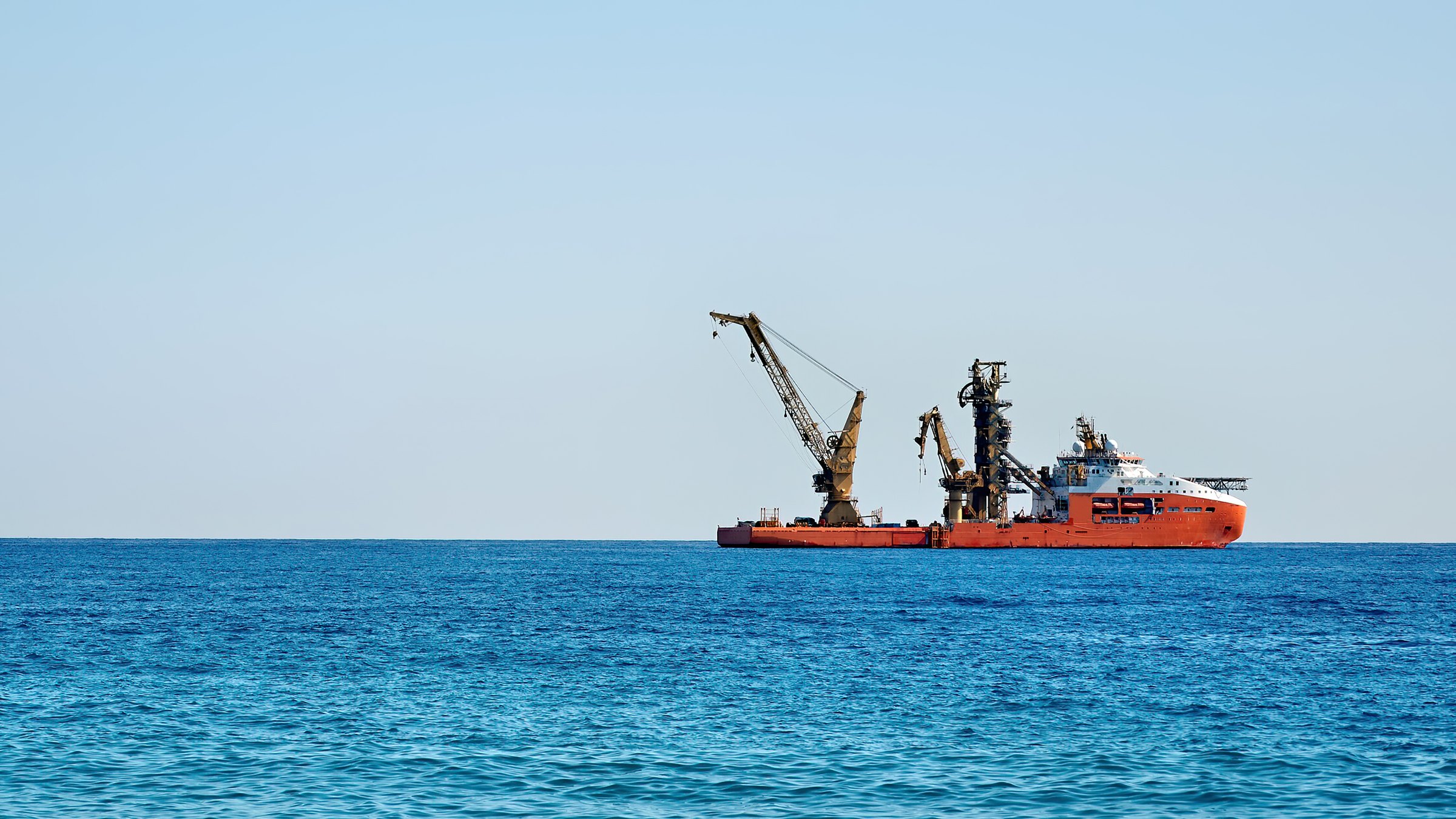
The Norwegian petroleum regime does not use an identical test-mining and pilot-mining sequence. It nevertheless provides a relevant assurance model.
New or insufficiently proven technology may be qualified against defined performance requirements. DNV-RP-A203 provides a recognised process for identifying uncertainties, defining qualification activities and documenting whether a technology is sufficiently reliable for its intended use.
The Norwegian system also distinguishes between the general suitability of a mobile facility and approval of a specific operation. An Acknowledgement of Compliance addresses the facility’s technical condition, organisation and management system. The operator must still obtain activity-specific consent from Havtil before exploration drilling.
The lesson for deep-sea mining is not to reproduce the Norwegian system. It is to use staged evidence and separate decision gates before progressively more consequential activities begin.
Continual improvement connects the stages
Following the joint proposal, test mining should improve the mining-system design, exploitation application, environmental assessment, operating procedures and monitoring arrangements.
Pilot mining should then verify those improvements under more representative conditions. Differences between predicted and observed performance should result in reassessment and corrective action. Where changes are material, further testing or regulatory review may be necessary.
ISO management-system principles provide practical support. ISO 9001 connects operational control with performance evaluation, nonconformity and corrective action. ISO 14001 applies the same improvement logic to environmental performance. ISO 45001 and ISO 31000 reinforce competence, management of change and the review of risk as new evidence becomes available.
These standards do not determine when the ISA should approve exploitation. They help ensure that lessons from testing are converted into controlled and verifiable improvements.
Readiness must be demonstrated twice
The proposed two-phase model creates two distinct questions. Is there sufficient evidence to approve the exploitation proposal? Has the approved operation subsequently demonstrated that it is ready for commercial production?
For deep-sea mining, the route from exploration to exploitation should be a controlled progression. The value of test mining and pilot mining will ultimately depend on whether their findings improve the operation before the next decision to proceed.
Bruncell Larsen Strategic Advisory supports organisations working with regulatory compliance, operational assurance and management-system effectiveness in complex maritime activities. Please contact me if you would like to discuss these issues further.